
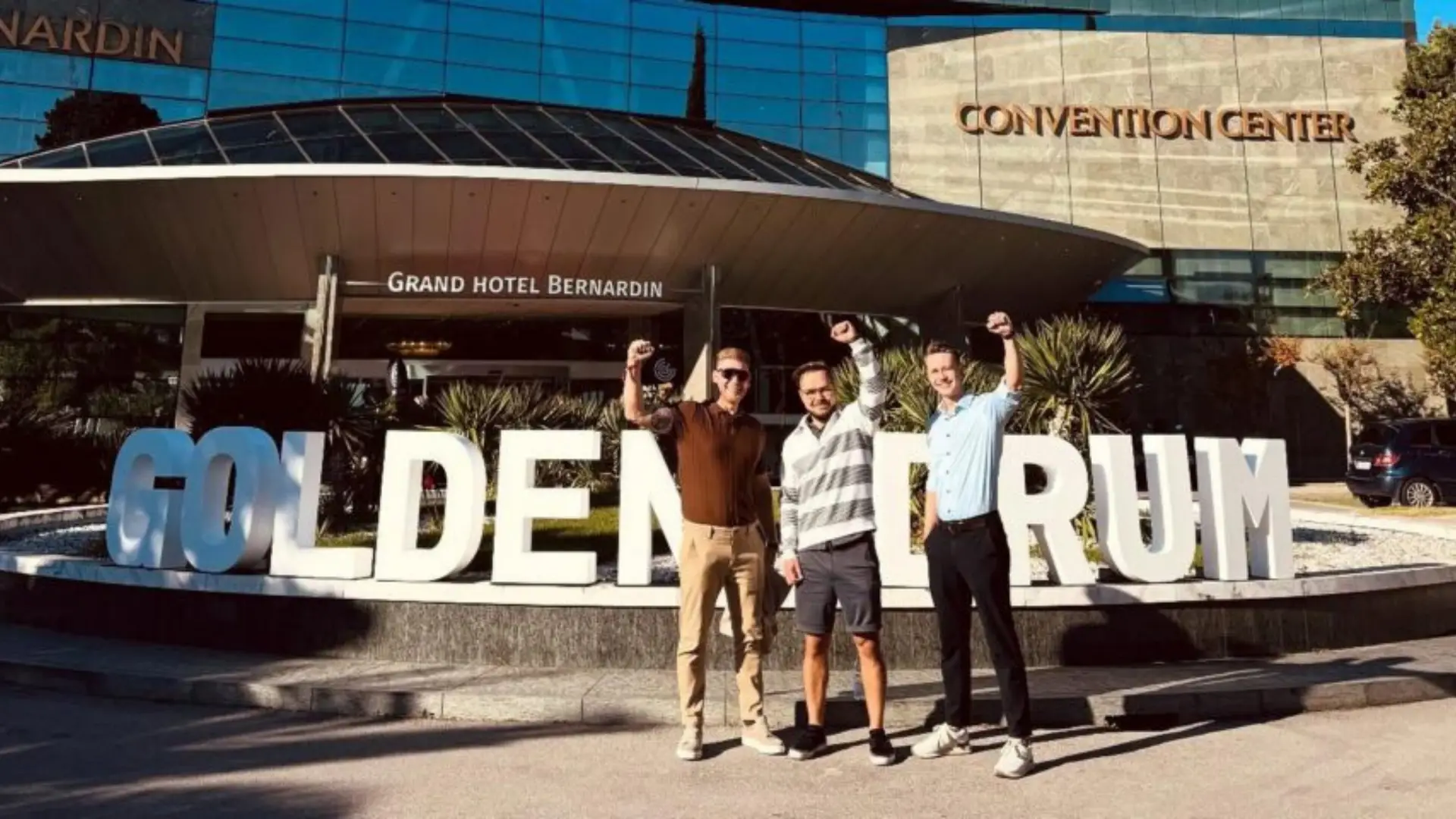
TULI article: Megapiksel and häk went to Golden Drum — creativity scares people, because creativity is unfamiliar to us
In October, ad agencies Megapiksel Stuudio and häk headed to Portorož, Slovenia, to take part in the 31st Golden Drum creativity festival. Now they're sharing their impressions, key takeaways, and notes from inspiring speakers.
Watch Megapiksel's vlog from the Golden Drum trip!
Creativity with impact: three effectiveness trends based on this year's most awarded campaigns
Speaker: Paul Stringer, WARC
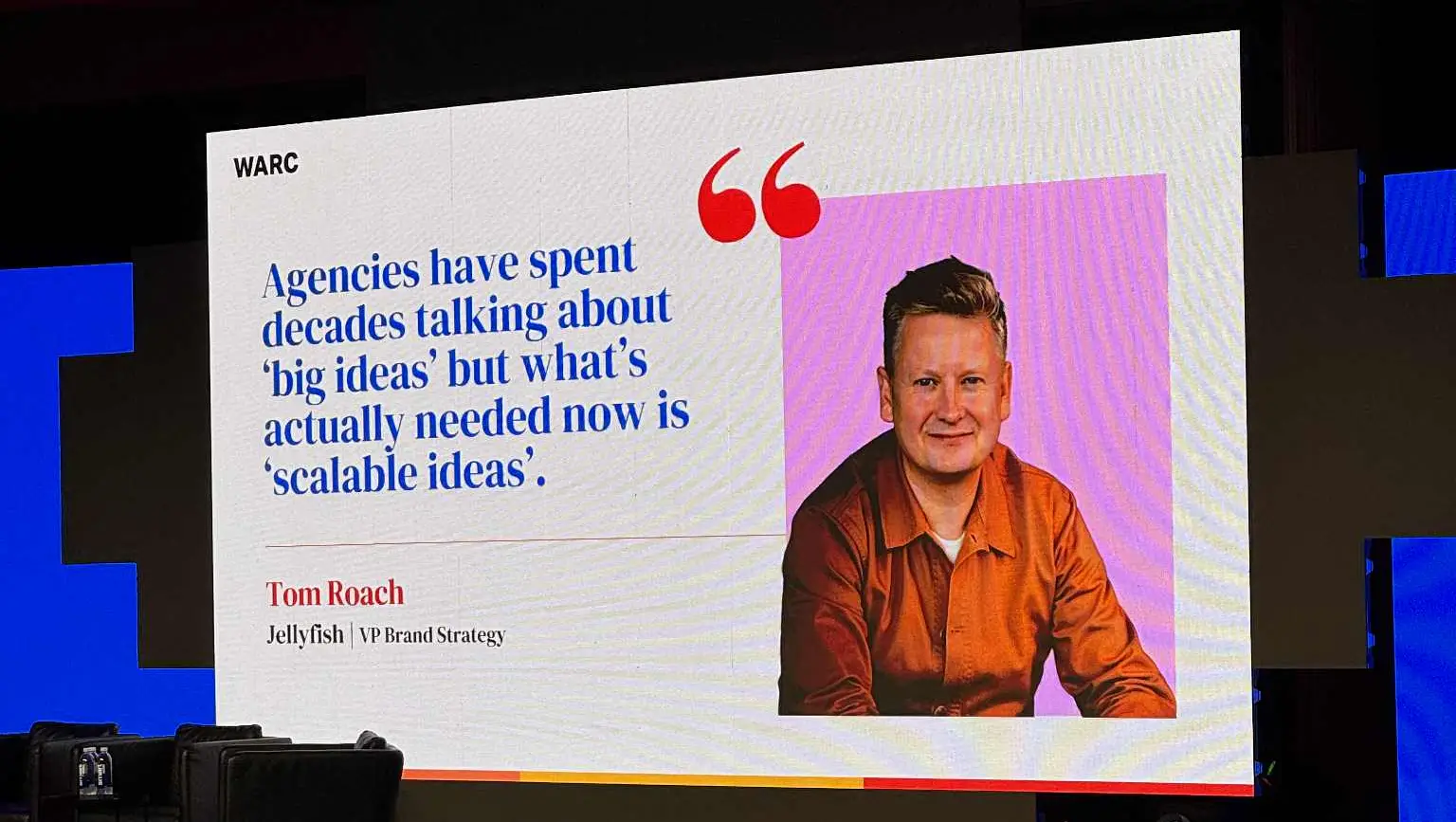
- Instead of one big idea, it's worth looking for scalable ones that create repeated touchpoints across different channels.
- What's needed are flexible ideas that a large number of different ads can be built from — a fragmented idea that forms a concept and stays fresh precisely because there are so many ads.
- A brand isn't treated as a story, but as a mosaic that forms a complete picture.
- Attention is the first step in creating a memory.
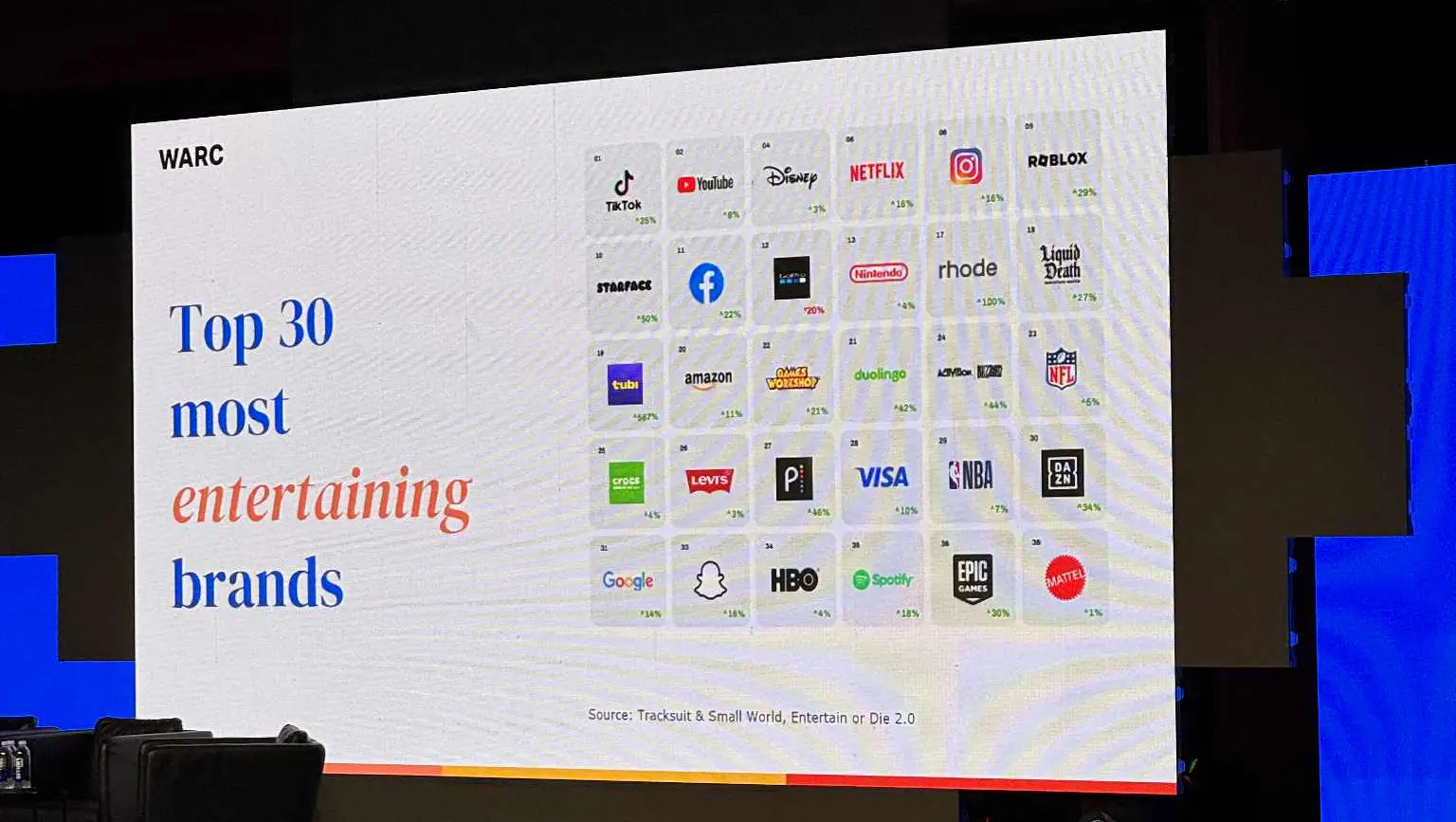
Think more like an entertainer: first capture attention, then create emotion, and only then deliver the brand message.
Although this sounds like a truism, research shows that 47% of people feel nothing when watching an ad. A boring ad burns through budget for nothing and leaves a lot of money on the table: -37% in short-term conversions, -14% in long-term ROI, +130% in wasted impressions.
“In a world where everything is skippable, you have to actually entertain people to get their attention” In other words, in today's world, you have to genuinely entertain people to win their attention.
- Leaders are taking fewer risks even as the importance of creativity keeps growing — creativity multiplies profit (Effie & System1, 2025).
Creativity is also directly correlated with an ad's lifespan. A creative ad can run longer before people get tired of it.
- Marketing budgets keep shrinking. While in 2018 the average marketing budget worldwide was 11.2% of company revenue, by 2025 that figure is 7.7%
- Media has a cumulative benefit that grows over time. The same is true of creativity. Brands with consistent creativity come out ahead in business.
- Campaign examples:
British Airways: “Because You Can” – A campaign featuring 500 unique print, digital, and outdoor executions along with 32 short films.
Guinness: “Holding Out For a ZERO” – An example of a campaign that grew out of a trend already spreading among people.
Vaselin: Verified – The brand spotted a trend on social media and started leading it.
Sheba: The Great Gravy Race.
Cadbury 5 Star India: Erase Valentine’s Day.
Heinz: It Has to Be Heinz
The Specsavers: The Misheard Version
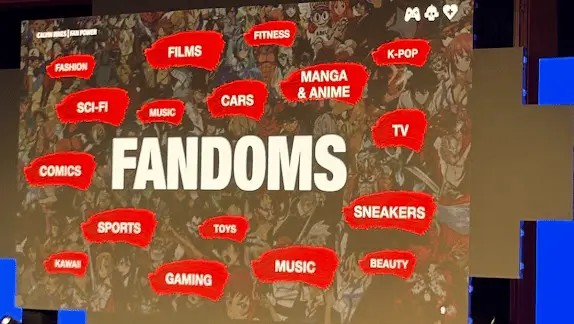
Fan power: how fandoms became the most valuable media channel
Speaker: Calvin Innes, JvM NERD
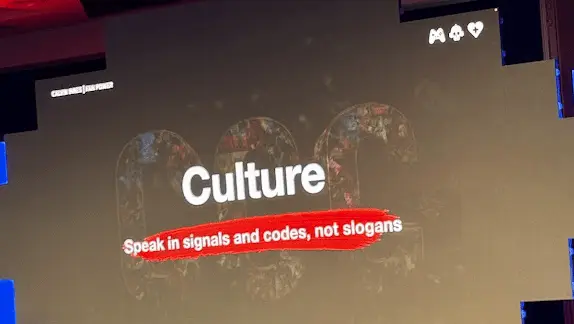
- Fan communities have been seen as a niche, but they're actually mainstream. A huge number of people belong to some fan group, whether it's film, sports, tennis, music, games, comics, or cars.
- Being a fan is like a badge of honor. If you become a fan before age 14, you're likely to stay a fan for life.
- Fan power is a cultural engine.
- Marketing within fan communities requires always putting fans first, and you have to earn your place. You have to contribute. Not just market to them, but create together with them.
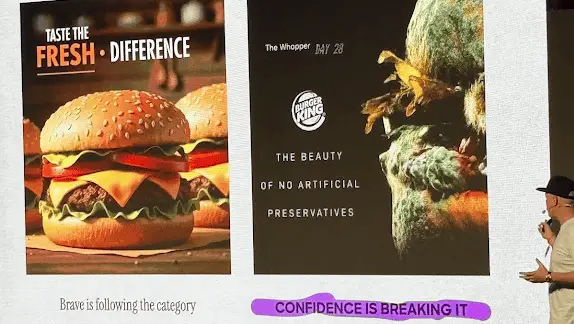
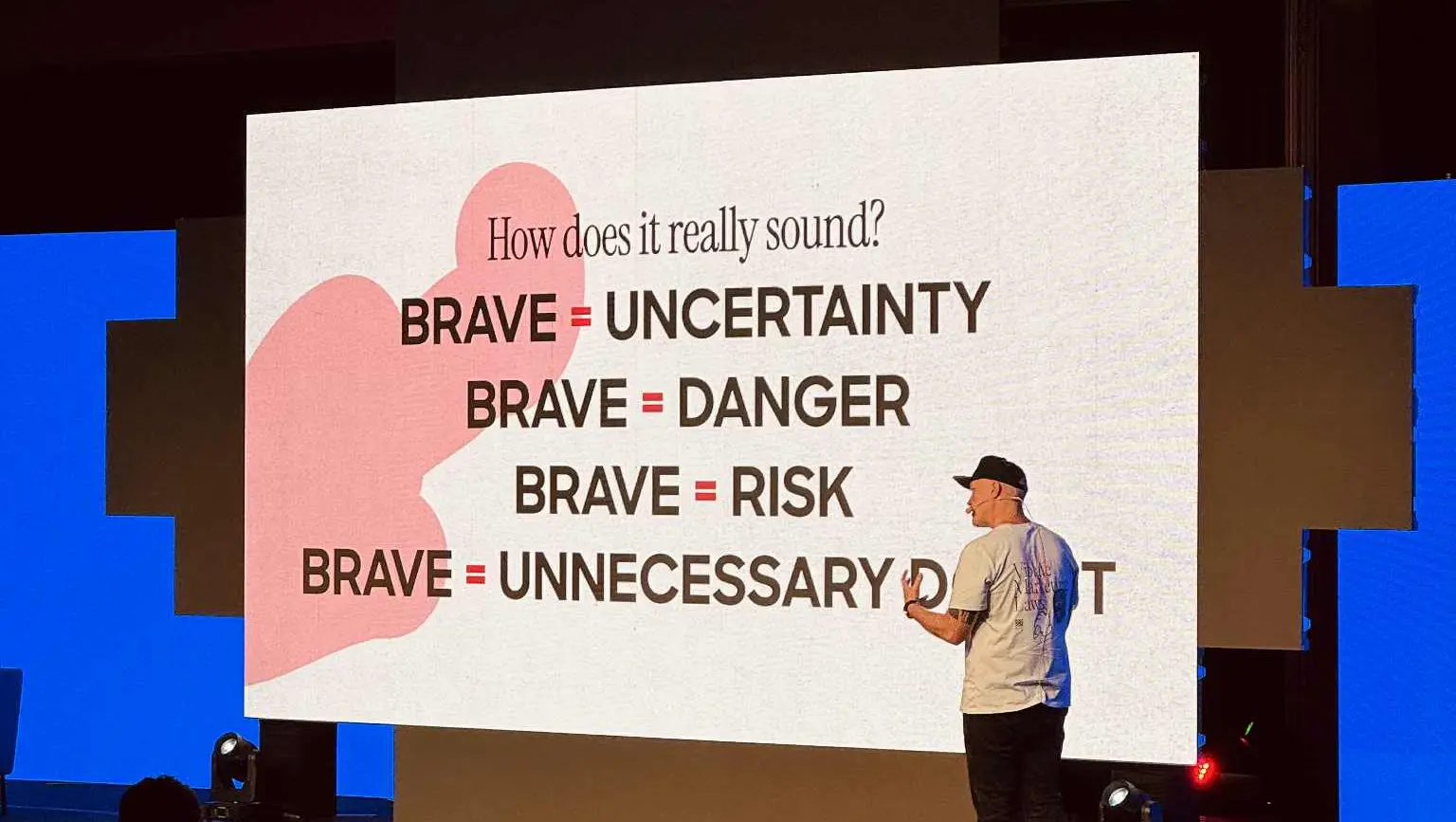
"F*ck being brave. Let's start being confident"
Speaker: Jake Barrow, VML Czechia
Jake Barrow talked about how we should stop using the tired phrase "brave idea" and say "confident idea" instead.
- Confidence makes a marketer come across as an expert.
Adopt a confident mindset. If you sense discomfort while thinking through or presenting a creative idea, be brave enough to embrace it. Discomfort is supposed to come with the territory — treat it as natural.
"Subvert or die"
Speaker: John Mescall, Dentsu Creative
A favorite presentation, from a gentleman in his fifties who drew on decades of experience to inspire the audience on how to survive in a world that needs creativity but is afraid of it.
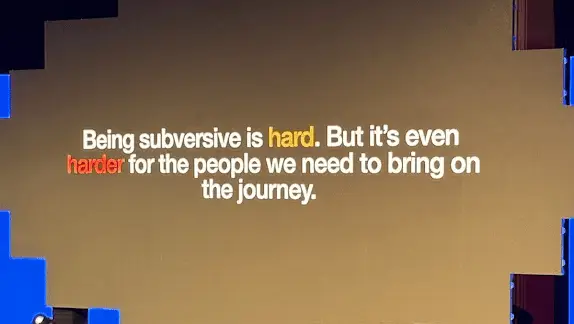
- Vastandumine (ingl subversion)look at what the world is like right now, then say it doesn't have to be that way, and turn things inside out.
- People are desperately afraid of what creative agencies offer them. Creativity scares people, because creativity is unfamiliar to us, but people are wired to seek out what's safe and familiar.
- Agencies get paid for work at a 5-out-of-10 level — meaning agencies get paid for mediocre work.
- It's a hard time to be a client.
- Know who your enemy is. The enemy is excessive (certainty).
On one side is excessive certainty, and on the other is creativity.
Google and Meta sell certainty. We sell risk.
- Turning things inside out isn't anarchy. You have to be charming, not a hammer.
Don't be upset if people don't want to follow you.
Be a leader of co-conspirators. Gather people around you. (Be a co-conspirator. Collect people.)
- Always present a radical idea as a logical one. The more radical the idea, the more conservatively you need to dress.
- Humor is your friend — the advertising industry lost its sense of humor 15 years ago.
- Small wins matter, and they need to be celebrated within the agency. Every good thing should be celebrated — there are more losses than wins.
- "Turning things inside out" is like a muscle. It takes time for it to take root in an agency's culture.
Gather enemies and find fans — the importance of branding in the digital age
Speaker: Freddie Öst, Snask
Freddie Öst founded Snask, a distinctive agency in Stockholm known for its originality. His talk included several exciting stories from what he's pulled off in the advertising world, aimed at encouraging the audience to live a bold life.
- Advertising as a lifestyle business — work and personal life are tightly intertwined; the speaker leads the kind of free-spirited life many creative people would love to live.
- Several stories were tied to different leisure-time anecdotes. For example, a running joke that he and Snask's co-founder are often mistaken for Steve Aoki and David Guetta.
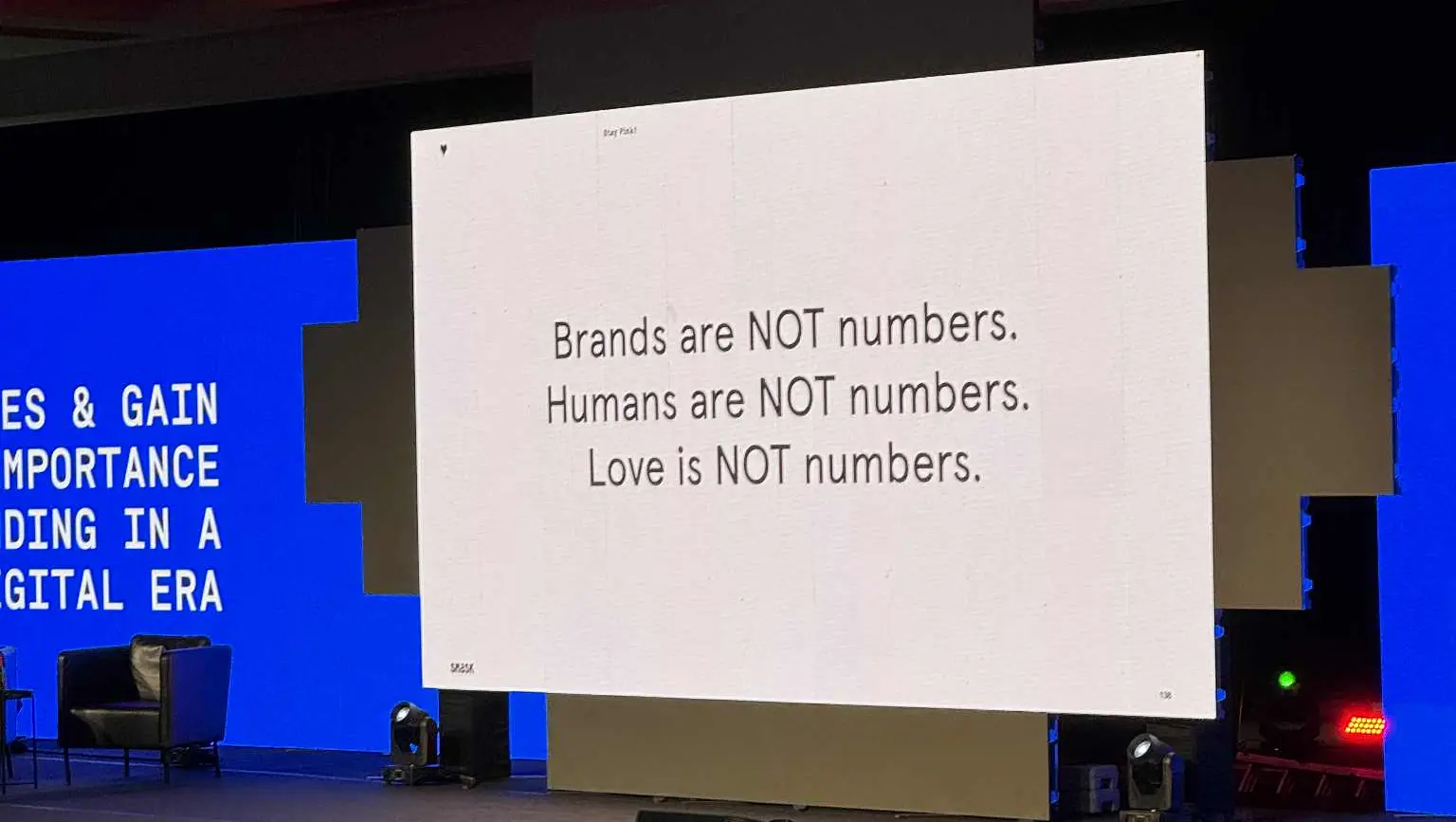
- He pointed out that marketing gets measured in numbers far too much, when the real driving force isn't numbers, but brands, people, and love.
- If Freddie Mercury had looked at the numbers, "Bohemian Rhapsody" would never have been written.
- Data can create an echo chamber that no new art, music, or culture is born from.
- At the after-party, a lot of people called Freddie Öst "The Speaker" — his talk was the most memorable and powerful one.
A beautiful, encouraging thought from him: "Grapes that grow in conditions that are too good don't make good wine. Good wine comes from grapes grown somewhere stressful — the wine ends up layered and mature."
- One example of their agency's work: Sneakersnstuff+Adidas
Summary
How was the event overall?
It was fascinating seeing the cultures of different former Yugoslav countries come together and talking with the locals. The Slovenians said they're the calmest of the former Yugoslav peoples — which was probably also why it was so easy to click with them, so to speak.
Some of Europe's strongest talents were there, from Bulgaria, the Czech Republic, Romania, Lebanon, and other countries you don't run into marketers from too often. Days were conference sessions, and evenings had the gala. The gala was really something. It was great seeing Europe's top work, which I'd previously only watched on YouTube, and watching it alongside the people who made it.
Would Megapiksel go to Golden Drum again?
Absolutely. Our group was really pleased. The feelings are unforgettable, and the memories are one of a kind. We also made new friends among Slovenia's ad crowd, who are coming to visit us in Estonia in April.
